
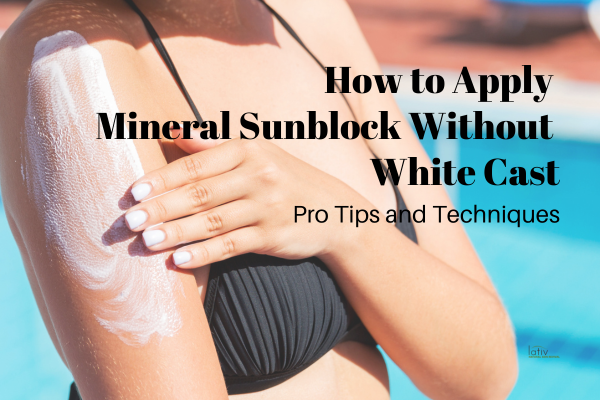
How to Apply Mineral Sunblock Without White Cast
If you’ve ever looked in the mirror after applying mineral sunblock and noticed a chalky white film across your face, you’re not alone. White cast is one of the most common concerns people have about mineral sun protection. Whether your skin is fair, medium, or deep, it’s frustrating when a product designed to protect your skin leaves behind a noticeable residue.
The good news is that a visible white cast doesn’t necessarily mean you’ve chosen the wrong product, or that mineral sunblock isn’t right for you.
In many cases, how you apply your sunblock is just as important as the formula itself. Skin hydration, application technique, layering with other skincare products, and the ingredients in your sunblock all influence how naturally it blends into your skin.
At Natural Skin Revival, we believe effective sun protection should feel comfortable enough for everyday wear. That’s why our SUNCARE collection combines non-nano zinc oxide with nourishing botanical ingredients designed to support healthy-looking skin while helping the formula spread more evenly. In this guide, you’ll learn why mineral sunblock sometimes leaves a white cast, how to minimize it, and what to look for when choosing a mineral formula that fits your skin type and daily routine
Key Takeaway
The white cast from mineral sunblock isn’t caused by applying it incorrectly, it’s primarily a result of zinc oxide, the ingredient responsible for broad-spectrum UV protection. However, proper application techniques and a thoughtfully formulated product can significantly improve how mineral sunblock looks and feels on your skin without sacrificing protection.
Table of Contents
- Why Mineral Sunblock Sometimes Leaves a White Cast
- Does White Cast Mean Your Sunblock Isn’t Working?
- Mineral Sunblock vs. Sunscreen: A Quick Explanation
- How to Apply Mineral Sunblock Without White Cast
- Common Mistakes That Cause White Residue
- Why Natural Skin Revival Uses Non-Nano Zinc Oxide
- How Our Formula Helps Reduce White Cast
- Mineral Sunblock Myths vs. Facts
- Enjoy Broad-Spectrum Defense Without the Chalky Finish
- Frequently Asked Questions
Why Does Mineral Sunblock Leave a White Cast?
The biggest reason mineral sunblock leaves a white cast comes down to one ingredient:
Zinc oxide.
Zinc oxide is one of the safest and most effective mineral UV filters available. It provides broad-spectrum protection against both UVA and UVB rays, making it a trusted choice for people with sensitive skin and those looking for naturally derived sun protection.
Unlike chemical sunscreens that absorb UV radiation before converting it into heat, zinc oxide forms a protective layer on the skin that reflects and scatters ultraviolet rays.
Because zinc oxide is naturally white, some of that light scattering is visible to the human eye, creating what we recognize as a white cast. However, not every mineral sunblock leaves the same level of residue. Several factors affect how noticeable it becomes.
1. Zinc Oxide Particle Size
Larger mineral particles tend to appear more visible on the skin than smaller, carefully dispersed particles.
Natural Skin Revival uses non-nano zinc oxide, which is intentionally formulated to remain on the skin’s surface for effective UV protection while being blended with emollients that help improve spreadability.
The goal isn’t to eliminate the protective mineral layer—it’s to help it distribute more evenly across your skin.
2. Your Skin Tone
People with deeper skin tones often notice white cast more than those with lighter complexions because the contrast between the zinc oxide and natural skin color is greater.
This doesn’t mean mineral sunblock can’t work beautifully on darker skin. Instead, it highlights the importance of choosing a thoughtfully formulated product and applying it gradually in thin, even layers.
3. Applying Too Much at Once
One of the most common mistakes is squeezing a large amount into your palm and trying to spread it over your entire face in one step.
Mineral sunblock performs much better when applied in smaller sections, allowing each area to blend before moving on to the next.
This simple adjustment often makes a noticeable difference in the final appearance.
4. Dry or Dehydrated Skin
Even the best mineral sunblock can cling to dry patches.
When skin lacks moisture, zinc oxide may collect in rough areas instead of spreading evenly across the surface.
Applying sunblock after your moisturizer has absorbed helps create a smoother base, making the formula easier to distribute while supporting your skin’s moisture barrier.
5. The Overall Formula Matters
Not all mineral sunblocks are created equal.
Two products containing the same percentage of zinc oxide can perform very differently depending on the supporting ingredients.
Lightweight botanical oils, moisturizing ingredients, and carefully balanced emulsions all contribute to how easily a formula spreads across the skin.
That’s one reason why some mineral sunblocks feel heavy and chalky while others leave a softer, more natural-looking finish.
Does a White Cast Mean Your Sunblock Isn’t Working?
No. In fact, the opposite is often true. The white appearance comes from the same mineral ingredients that help provide broad-spectrum UV protection. A slight white cast doesn’t indicate that something is wrong with your product. it simply reflects the natural properties of zinc oxide.
That said, a heavy, uneven white layer isn’t ideal either. If large streaks remain after application, it usually means one of three things:
- Too much product was applied all at once.
- The product hasn’t been fully blended.
- Your skin wasn’t properly prepared before application.
With a few small adjustments to your routine, most people can significantly improve how mineral sunblock looks while still applying enough product to achieve the labeled SPF protection.
Mineral Sunblock vs. Sunscreen: A Quick Explanation
You’ve probably seen the terms sunblock and sunscreen used interchangeably. While both protect your skin from ultraviolet rays, they work differently.
Mineral sunblocks rely on active ingredients such as zinc oxide to form a protective barrier on the skin’s surface, helping reflect and scatter harmful UV rays. Chemical sunscreens use different active ingredients that absorb UV radiation before it can damage the skin.
At Natural Skin Revival, we focus on mineral sun protection because non-nano zinc oxide offers broad-spectrum protection while being well suited for sensitive skin and everyday outdoor activities.
Want a deeper comparison? Read our guide on Sunblock vs. Sunscreen: What’s the Difference?
Sunscreen
Chemical sunscreens filters or “screens” the sun’s UV rays, letting some of the rays in. Sunscreens usually contain oxybenzone or avobenzone. They need to absorb into the skin and waiting at least 30 minutes to absorb is crucial. application isn’t an issue.

How to Apply Mineral Sunblock Without White Cast
The way you apply mineral sunblock can make a significant difference in how it looks and feels. Follow these simple steps to help achieve smoother, more even coverage while maintaining the protection your skin needs.
Step 1: Start With Clean, Moisturized Skin
Hydrated skin provides the best canvas for mineral sunblock. After cleansing, apply your daily moisturizer and allow it to absorb completely before moving to the next step.
Moisturized skin helps the sunblock spread more evenly, reducing the likelihood of product collecting around dry patches or fine lines.
Step 2: Give Your Skincare Time to Absorb
Applying sunblock immediately after moisturizer can cause products to mix together before they’ve had time to settle. Waiting just a few minutes allows each layer to absorb properly, creating a smoother surface for your mineral sunblock.
Step 3: Warm the Product Before Applying
Mineral sunblock can spread more evenly when it’s slightly warmed.
Dispense the recommended amount into your fingertips and gently rub your fingers together for a few seconds. This softens the formula, making it easier to distribute evenly across your skin without dragging or tugging.
While this step won’t eliminate white cast on its own, it can improve blendability and create a smoother application.

Step 4: Apply in Small Sections
Instead of covering your entire face at once, divide it into manageable areas:
- Forehead
- Right cheek
- Left cheek
- Nose
- Chin
- Neck
- Ears (often forgotten but equally important)
Place small dots of product on each area before blending. This technique helps ensure even coverage and prevents the product from drying before you’ve had a chance to work it into your skin.
Step 5: Blend Gently Using Patting Motions
Many people instinctively rub mineral sunblock into their skin as though they’re applying lotion. While it may seem logical, aggressive rubbing can actually create uneven streaks and cause the product to collect in certain areas.
Instead:
- Use gentle circular motions initially.
- Finish by lightly patting the product into your skin.
- Blend outward toward the hairline and jawline.
- Take your time rather than rushing.
The goal is an even, consistent layer, not to make the zinc oxide disappear completely.
Step 6: Apply the Right Amount
One of the biggest misconceptions about mineral sunblock is that using less product will reduce white cast.
While it may appear more transparent, using too little also reduces the level of sun protection, meaning you may not receive the SPF listed on the label.
For most adults, dermatology organizations recommend applying approximately ¼ teaspoon of sunscreen to the face, often demonstrated using the two-finger method (a line of product along the length of the index and middle fingers). This amount is designed to help achieve the labeled SPF when applied evenly.
If applying the full amount at once feels difficult, divide it into two thin layers:
- Apply half the recommended amount and blend thoroughly.
- Apply the remaining half once the first layer has settled.
This approach often creates a more natural finish while maintaining proper coverage.
Tip: Don’t forget your ears, neck, and hairline. These areas are commonly missed but receive significant daily sun exposure.
Step 7: Wait Before Applying Makeup
If you wear makeup, allow your mineral sunblock to set for several minutes before applying foundation or concealer.
Giving the product time to settle helps reduce pilling, improves makeup application, and minimizes the risk of disturbing the protective layer.
For many people, five to ten minutes is enough for the sunblock to form an even base.
Step 8: Reapply Without Creating Build-Up
Sun protection doesn’t last all day.
Most dermatologists recommend reapplying every two hours during continued sun exposure, and more frequently after swimming, sweating, or towel drying.
If you’re outdoors:
- Gently blot away excess oil or sweat first.
- Reapply using the same thin-layer technique.
- Avoid piling thick layers on top of old product whenever possible.
If you’re wearing makeup, consider mineral SPF powders or sprays designed for touch-ups, although they should complement—not replace, proper sunscreen application when possible.
Common Mistakes That Cause White Residue
Even high-quality mineral sunblock can appear chalky if it’s applied incorrectly. Avoid these common mistakes to help achieve a smoother finish.
| Mistake | Why It Happens | Better Approach |
|---|---|---|
| Applying too much at once | Product sits on the surface before it can be blended | Apply in small sections |
| Applying to dry skin | Zinc oxide clings to dry patches | Moisturize first |
| Rubbing aggressively | Creates streaks and uneven coverage | Blend gently, then pat into skin |
| Layering too quickly | Products mix together before absorbing | Allow skincare to settle |
| Using too little product | Reduces SPF protection | Apply the recommended amount gradually |
| Skipping the neck and ears | Missed areas remain unprotected | Include all exposed skin |
Small adjustments like these can dramatically improve both the appearance and performance of your daily sun protection routine.
Why Natural Skin Revival Uses Only Non-Nano Zinc Oxide
At Natural Skin Revival, we believe effective sun protection should work with your skin, not against it. That’s why our SUNCARE collection is formulated with non-nano zinc oxide as the sole active mineral UV filter.
Non-nano zinc oxide provides broad-spectrum UVA and UVB protection while remaining on the skin’s surface, making it an excellent choice for everyday mineral sun protection.
Rather than combining multiple mineral filters, we’ve intentionally formulated our products without titanium dioxide. Instead, we focus on creating balanced formulas that pair non-nano zinc oxide with nourishing botanical ingredients selected to improve spreadability and everyday comfort.
This thoughtful approach allows our products to:
- Provide broad-spectrum mineral protection
- Support sensitive skin
- Spread more evenly across the skin
- Feel comfortable for daily use
- Help reduce the heavy, chalky appearance often associated with traditional mineral sunblocks
Because we prioritize both performance and skin health, every ingredient is selected with long-term skin wellness in mind, not simply SPF performance.
How Our Formula Helps Reduce White Cast
White cast isn’t determined by zinc oxide alone. The supporting ingredients in a formula play a significant role in how the product looks and feels after application.
That’s why Natural Skin Revival’s SUNCARE products are formulated with ingredients that work together to improve the overall user experience.
Lightweight Botanical Oils
Botanical oils help the formula glide more smoothly across the skin, making it easier to achieve even coverage without excessive rubbing.
Moisturizing Ingredients
Well-hydrated skin naturally allows mineral sunblock to distribute more evenly, reducing the likelihood of product settling into dry areas.
Balanced Texture
Instead of feeling thick or pasty, a balanced emulsion allows the sunblock to spread consistently while maintaining the integrity of the protective mineral layer.
Everyday Wearability
Sun protection only works when it’s part of your daily routine.
By creating formulas designed for comfort, hydration, and smooth application, we aim to make mineral sunblock something you’ll want to wear every day—not just at the beach.
Product Recommendation:
-
 SUNCARE Hydrating Face Cream Dry SkinProduct on saleOriginal price was: $18.95.$15.16Current price is: $15.16.
 -
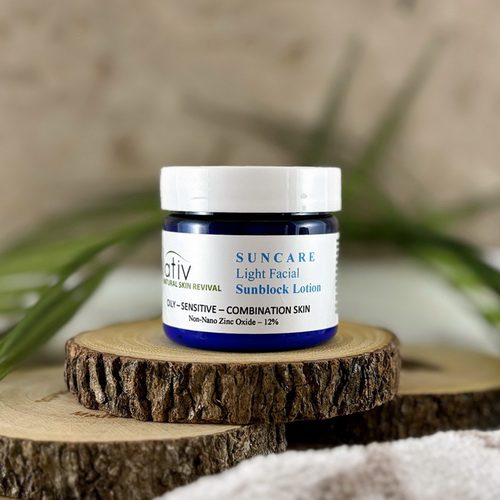 SUNCARE Light Face Cream Oily Sensitive SkinProduct on saleOriginal price was: $18.95.$15.16Current price is: $15.16.
 -
 SUNCARE Sunblock Body LotionProduct on saleOriginal price was: $19.95.$15.95Current price is: $15.95.
 -
 SUNCARE Vegan Lip BalmProduct on saleOriginal price was: $5.95.$5.05Current price is: $5.05.
Mineral Sunblock Myths vs. Facts
Many misconceptions about mineral sunblock can make it difficult to choose the right product or use it correctly. Let’s separate fact from fiction.
| Myth | Fact |
|---|---|
| A white cast means the product isn’t working. | A slight white cast is a natural result of zinc oxide reflecting light and doesn’t indicate poor performance. |
| Using less sunblock prevents white cast. | Using too little may reduce the SPF protection you receive. It’s better to apply the recommended amount in thin, even layers. |
| Mineral sunblock doesn’t work on darker skin tones. | Modern, well-formulated mineral sunblocks can work beautifully on all skin tones when applied correctly. |
| Mineral sunblock is only for sensitive skin. | While it’s a popular choice for sensitive skin, anyone can benefit from broad-spectrum mineral protection. |
| Thicker layers provide better protection. | Even coverage is more important than thick application. Apply the recommended amount gradually for the best results. |
| White cast is unavoidable. | While a slight residue can occur with zinc oxide, proper skin preparation, thoughtful formulation, and correct application can significantly reduce its appearance. |
Common Questions About Mineral Sunblock
Can darker skin tones wear mineral sunblock?
Absolutely.
People with deeper skin tones may notice white cast more readily because of the greater contrast between zinc oxide and their natural complexion. However, choosing a well-formulated mineral sunblock, moisturizing first, and applying in thin, even layers can make a significant difference.
Modern formulations are far more cosmetically elegant than many mineral sunblocks available a decade ago.
Does non-nano zinc oxide always leave a white cast?
Not necessarily.
Non-nano zinc oxide is naturally white, but the overall appearance depends on much more than the active ingredient alone.
The complete formulation—including botanical oils, moisturizers, texture, and dispersion of the zinc oxide—plays a major role in how the product blends into the skin.
Can I wear makeup over mineral sunblock?
Yes.
Allow your mineral sunblock to set for several minutes before applying foundation, concealer, or powder. This helps reduce pilling and allows the protective layer to remain more evenly distributed.
Many people find that mineral sunblock also works well as a makeup primer when paired with the right moisturizer.
Does mineral sunblock expire?
Yes.
Like all sunscreen products, mineral sunblocks have expiration dates. Using an expired product may reduce the level of UV protection.
Store your sunblock in a cool, dry place and replace it once it reaches its expiration date or if the texture, color, or smell changes noticeably.
Is mineral sunblock better for everyday use?
For many people, yes.
Mineral sunblock provides broad-spectrum protection without relying on chemical UV filters, making it a popular choice for daily wear, especially for people with sensitive or reactive skin.
The best sunscreen is ultimately the one you’ll wear consistently every day.
Enjoy Broad-Spectrum Defense Without the Chalky Finish
A little white cast doesn’t have to be the trade-off for choosing a mineral sunblock.
Understanding why zinc oxide leaves a visible residue—and learning how to apply it correctly, can transform your daily sun care routine. From preparing your skin with moisturizer to applying the right amount in thin, even layers, small adjustments can make a noticeable difference in both comfort and appearance.
At Natural Skin Revival, we believe sun protection should support healthy skin, not complicate your routine. That’s why our SUNCARE collection is formulated with non-nano zinc oxide, nourishing botanical ingredients, and carefully balanced textures that help the product spread smoothly while providing broad-spectrum mineral protection for everyday wear.
Whether you have dry, oily, mature, or sensitive skin, consistent daily sun protection is one of the most important investments you can make in your skin’s long-term health. With the right technique and the right formula, you can enjoy the benefits of mineral sunblock without letting a chalky finish stand in your way.
Frequently Asked Questions
1. Should I moisturize before applying sunblock to avoid chalkiness?
Yes, light moisturizer creates a hydrating base, helping mineral filters spread evenly and reducing white build-up.
2. Can heating sunblock in my hands help it absorb better?
Yes, a brief warm-up breaks down the formula structure, making it easier to pat and blend without tugging.
3. Are tinted or clear sunblock’s better for darker skin tones?
Tinted sunscreens are ideal, they counteract white cast. Clear or sheer mineral options with micronized filters also work well without changing skin tone.
4. Why does titanium dioxide leave more white cast than zinc oxide?
Actually, titanium tends to be less visibly white but still reflective. Particle size and coating matter more; large or untreated TiO₂ can still appear chalky.
5. Which filters or particle sizes reduce white cast most effectively?
Micronized or nano particles (around 20–200 nm), especially coated zinc oxide variants, offer the best sheer appearance.
6. Are spray or gel sunblock alternatives less likely to show chalkiness?
Sprays/gels can feel less white but often deliver inconsistent SPF. If using them, blend quickly by hand to ensure complete coverage without residue.
7. What’s the difference between zinc oxide and titanium dioxide?
Both are mineral UV filters that provide sun protection. Zinc oxide offers excellent broad-spectrum UVA and UVB coverage, while titanium dioxide is particularly effective against UVB and short-wave UVA. Natural Skin Revival formulates its SUNCARE collection with non-nano zinc oxide as the sole active mineral filter.
Written By: Mary Ellen Wank, Wellness Advocate and Founder of LATIV, Natural Skin Revival
Recommended Articles:
Summer Skin: 6 Go-To All-Natural Essentials
Shine Control: How to Control Oily Skin During Summer
5 Ways to Repair Your Summer Skin Using Neem
How to Keep Your Skin Fresh & Clear While Traveling
Mosquitoes: Here’s Why You Attract Them
July 25, 2026 11:00 am
Comments are closed here.